
Latest Products


Contact Us
- No.92 Jianshe West Road, Zhongyuan District, Zhengzhou, Henan,China.
- albert@literefractory.com
- +8619937887923


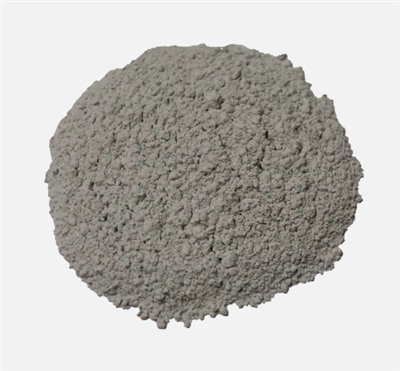

Refractory Castables Types
Castables (refractory castables) can be divided into many types according to their constituent materials, use environment and performance requirements.
Description
The following are some common types of castables:
15 common types of castables
High-alumina castables: Contains a high proportion of alumina (Al₂O₃), has high refractoriness and slag resistance, and is suitable for high temperature environments.
Clay castables: With clay as the main raw material, it has low refractoriness, but low cost, and is suitable for medium and low temperature conditions.
Silica castables: Mainly composed of silica, it has high refractoriness, but poor thermal shock resistance, and is suitable for high temperature environments such as glass kilns.
Magnesium castables: Contains a high proportion of magnesium oxide (MgO), has good slag resistance and high temperature structural strength, and is commonly used in the steel industry.
Chromium castables: Contains chromium ore or chromite, has high refractoriness and good slag resistance, but the chromium element has certain harm to the environment.
Silicon carbide castable: contains silicon carbide (SiC), has excellent wear resistance and erosion resistance, suitable for environments requiring wear resistance such as circulating fluidized bed boilers.
Lightweight castable: By using lightweight aggregates or foaming agents to reduce the bulk density of the material, it provides good thermal insulation performance.
Acid-resistant castable: specially designed for environments that resist acid corrosion, usually contains acid-resistant materials such as siliceous or clay materials.
Alkali-resistant castable: used to resist corrosion in alkaline environments, usually uses high-aluminum or magnesium materials.
Low-cement castable: uses less binder (cement) to improve structural strength and erosion resistance at high temperatures.
Cement-free castable: does not use cement as a binder, relies on chemical bonding or physical bonding to solidify, and has higher refractoriness and slag resistance.
Phosphate-bound castable: uses phosphate as a binder, has good high-temperature performance and erosion resistance.
Self-leveling castable: has good fluidity and can automatically level during construction, reducing manual intervention.
Fast-hardening castables: Add early strength agents or use special binders to achieve higher strength in a short time, suitable for rapid repair or construction.
Ultra-low cement castables: Further reduce the cement content to improve high temperature performance.
In addition, there are many special castables developed according to specific industrial applications and special requirements, such as castables for high temperature resistance, anti-penetration, anti-stripping, etc. There may be overlaps or combinations between these types, because different additives and processes can adjust the properties of the material to meet specific needs.
Hot Tags: refractory castables types, China refractory castables types suppliers, manufacturers, factory
The technical parameters of the casting material are the key indicators for evaluating its performance and applicability. Different types of casting materials (such as lightweight casting materials, high-alumina casting materials, steel fiber casting materials, etc.) have different technical parameter requirements. The following are the main technical parameters of casting materials sorted based on the search results:
1. Density
Density is one of the important factors determining the thermal insulation performance of materials. Lightweight molding materials have a lower density, which can effectively reduce heat conduction and improve the energy efficiency of buildings.
2. Thermal Conductivity
Thermal conductivity refers to the ability of a material to conduct heat. Lightweight molding materials, due to their unique composition structure, have a relatively low thermal conductivity, making them an ideal insulating material. When selecting, it is necessary to ensure that this coefficient meets the design requirements to achieve the expected insulation effect.
3. Fire Resistance
Fire resistance means that the material can remain stable at high temperatures without deforming or deteriorating. The fire resistance of high-aluminum casting materials can reach up to 1790 degrees Celsius, demonstrating excellent high-temperature performance.
4. Mechanical Strength
Although the primary function of lightweight castables is to provide insulation, they also need to possess certain mechanical strength to ensure that they will not easily break or deform during construction and use. Therefore, when selecting the type, attention should be paid to the mechanical performance indicators such as compressive strength and flexural strength of the materials.
5. Chemical Stability
Good chemical stability enables lightweight molding materials to be used for a long time under various environmental conditions without being corroded or damaged by chemicals. This is particularly important in some special working environments (such as those containing acidic or alkaline gases) 1.
6. Construction Performance
Construction performance includes factors such as fluidity and setting time. Excellent construction performance ensures that the casting material is easy to handle and shape during the construction process.
7. Environmental Friendliness and Healthiness
As the importance of environmental protection and human health continues to increase, it has become increasingly crucial to choose lightweight casting materials with low volatile organic compound (VOC) emissions and non-toxic components.
8. Linear Change Rate
The linear change rate is an important indicator for measuring the volume stability of materials at high temperatures. For instance, the linear change rates of 80 steel fiber casting materials under the conditions of 110℃ × 24h and 1100℃ × 3h are ±0.1% and ±0.3%, respectively.
9. Compressive Strength
Compressive strength is an indicator used to measure the material's ability to withstand pressure. For instance, the compressive strength CCS (in MPa) of 80 steel fiber casting material should be ≥ 110×24h3.
You Might Also Like


