Latest Products



Contact Us
- No.92 Jianshe West Road, Zhongyuan District, Zhengzhou, Henan,China.
- albert@literefractory.com
- +8619937887923


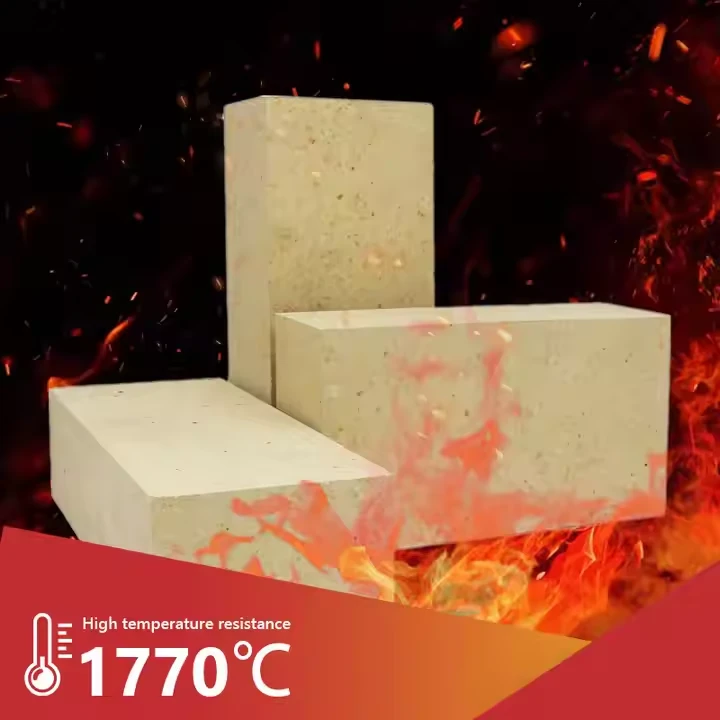
High Alumina Fire Brick 220mm Alkali Resistant Refractory Brick For Heating Furnace Kiln And Industrial Lining
High alumina bricks are a category of advanced refractory materials characterized by their high Al₂O₃ content (typically >48%), exceptional thermal stability, and resistance to chemical corrosion. Widely used in high-temperature industrial processes, these bricks bridge the performance gap between traditional fireclay bricks and specialized oxide refractories like corundum.
Description
High Alumina Bricks: Properties, Classification and Industrial Applications
High alumina bricks are a category of advanced refractory materials characterized by their high Al₂O₃ content (typically >48%), exceptional thermal stability, and resistance to chemical corrosion. Widely used in high-temperature industrial processes, these bricks bridge the performance gap between traditional fireclay bricks and specialized oxide refractories like corundum.

⚙️ Key Technical Properties
| Property | Typical Value | Industrial Significance |
|---|---|---|
| Al₂O₃ Content | 48-90% | Determines refractoriness and chemical resistance |
| Bulk Density | 2.3-3.0 g/cm³ | Higher density indicates better mechanical strength |
| Apparent Porosity | 18-28% | Balances thermal insulation and corrosion resistance |
| Cold Crushing Strength | 50-150 MPa | Critical for load-bearing applications in kilns |
| Refractoriness (SK Number) | SK 32-38 (1770-1850°C) | Enables use in ultra-high temperature environments |
| Thermal Conductivity | 1.5-3.0 W/(m·K) @ 1000°C | Controls heat transfer efficiency in industrial furnaces |
📊 Classification by Alumina Content
High alumina bricks are classified into four main grades based on their Al₂O₃ percentage, each tailored to specific industrial requirements:
First Grade (>75% Al₂O₃)
Primary Applications: Steel ladles, blast furnace hearths, glass furnace regenerators
Key Feature: Excellent resistance to molten slag and metal erosion
Second Grade (60-75% Al₂O₃)
Primary Applications: Cement rotary kilns, ceramic kiln linings, chemical reactor liners
Key Feature: Optimal balance between cost and performance
Third Grade (48-60% Al₂O₃)
Primary Applications: Boiler furnaces, lime kilns, non-ferrous metal smelting
Key Feature: Cost-effective solution for moderate-temperature (1400-1600°C) operations
Specialized Variants
Zirconia-Added High Alumina Bricks: Enhanced thermal shock resistance for glass industry
Silicon Carbide Reinforced Grade: Improved abrasion resistance for ore processing equipment
🏭 Major Industrial Applications
🔥 Iron & Steel Industry
Blast Furnaces: Hearth and bosh linings withstand temperatures up to 1600°C and iron ore slag corrosion
Converter Linings: Resist high-velocity molten steel impact and oxidative environments
Continuous Casting Tundishes: Maintain stable temperature gradients during steel solidification
🏗️ Building Materials Production
Cement Kilns: Coating the transition zone (1450-1550°C) where clinker formation occurs
Lime Calcination Furnaces: Withstand cyclic temperature fluctuations and calcium oxide attack
🚜 Non-Ferrous Metallurgy
Aluminum Reduction Cells: Resist cryolite electrolyte corrosion at 950°C
Copper Smelting Furnaces: Handle sulfur-containing slags and high thermal loads
🔬 Chemical & Petrochemical Sector
Acid Regeneration Furnaces: Resist hydrochloric acid vapor corrosion
Catalyst Production Kilns: Maintain purity in high-temperature calcination processes

🔄 Manufacturing Process
The production of high alumina bricks involves precise control over raw materials and firing parameters:
Raw Material Preparation
Bauxite (main source of Al₂O₃) is calcined at 1500-1600°C to form corundum-mullite crystals
Additives: Silica flour (adjusts mullite formation), chromite (improves slag resistance)
Forming & Firing
Dry pressing at 50-100 MPa to achieve desired density
Sintering in tunnel kilns at 1600-1700°C for 24-36 hours to promote mullite (3Al₂O₃·2SiO₂) formation
Quality Control
XRF analysis for Al₂O₃/SiO₂ ratio verification
Ultrasonic testing to detect internal cracks
💡 Selection Considerations
When specifying high alumina bricks, industrial operators must evaluate:
Operating temperature range and thermal cycling frequency
Chemical nature of process media (acidic/alkaline slag, molten metals)
Mechanical loads and abrasion conditions
Cost-performance balance across brick grades
Technical Note: For applications involving severe thermal shock (e.g., glass furnace regenerators), select bricks with controlled porosity (22-25%) and low thermal expansion coefficient (3.5-4.5×10⁻⁶/°C).
High alumina bricks continue to evolve through nanotechnology advancements, with recent developments in nano-mullite reinforced grades showing 30% improvement in thermal shock resistance. Their versatility makes them indispensable in the transition toward high-efficiency, low-emission industrial processes.
Hot Tags: high alumina fire brick 220mm alkali resistant refractory brick for heating furnace kiln and industrial lining, China high alumina fire brick 220mm alkali resistant refractory brick for heating furnace kiln and industrial lining suppliers, manufacturers, factory
You Might Also Like