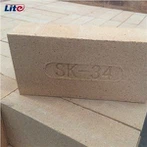
Refractory materials such as high alumina bricks are widely used in various blast furnaces, especially steel furnaces. Today, I will introduce the lining materials and construction technology of the hot metal ladle. The iron ladle used in the No. 1 Steelmaking Plant of Nanjing Iron and Steel is mainly used for receiving molten iron, molten iron desulfurization and receiving reheated steel. Its refractory materials not only have to withstand a certain weight of molten iron for a long time at high temperature, but also withstand the mechanical erosion of liquid molten iron. The working environment of the ladle is quite harsh, so the life span of the ladle always affects the safe production of steel mills.
Investigation on the status quo of ladle
As our factory's output requirements continue to increase, the production rhythm has also been significantly accelerated. The frequent turnover of iron ladle (minor repairs, overhauls, etc.) puts pressure on the continuous production of converters. According to statistics, in the first half of 2016, the average life of the iron ladle was 660 furnaces, the minor repair cycle was 50.2 furnaces, and the production time occupied by the turnover was 30.4 minutes. In order to meet the production rhythm of the converter and reduce the impact caused by the turnover ladle (replacement of the turnover ladle will take up the time required to add molten iron to the truck), start from increasing the age of the ladle, reduce the turnover frequency of the ladle, and improve the efficiency of the use of the ladle. Buy time for converter production and achieve the win-win goal of reducing the consumption of refractory materials.
improvement measures
2.1 Improvement of masonry technology
The construction sequence of the ladle pouring process: the details are as follows:
Construction sequence of ladle pouring process:
Paste the insulation board (package wall, package bottom) → pouring the bottom of the package → curing until the bottom of the package has sufficient strength → placing the tire mold, pouring the wall of the package → demoulding, curing → baking
Change to the construction sequence of the masonry process:
Ladle bottom pouring → curing until the bottom of the ladle has sufficient strength → masonry of the bottom working layer → masonry of the first/second layer of the insulation layer of the cladding wall, → masonry of the working layer of the cladding wall → baking
(1) The ladle bottom pouring process, the permanent lining of the molten iron ladle is poured with high-aluminum castables with a thickness of 80mm. The high-aluminum castable at the bottom of the package needs to be vibrated and compacted with a vibrating rod. After the bottom casting material is poured, it is allowed to stand and maintain to sufficient strength and dry for 48 hours before the work lining material can be built.
(2) Masonry of the bottom working layer of the bag, check the permanent layer of the bottom of the bag, if unevenness must be repaired; spread a layer of leveling material, fire mud or (dry) castable on the permanent layer of the bag bottom. According to the requirements of the design drawings, masonry the bottom working layer (material is ASC brick, thickness 250mm), and the masonry direction is vertical or parallel to the trunnion. Every brick is leveled, tight, and pryed firmly, and the front and rear bottom bricks cannot be re-sewn. The brick surface is required to be flat during masonry, and the height difference between bricks is less than 3mm. An impact zone with a width of 600mm is built in the middle area of the bottom of the bag. Fill the gap between the bottom of the bag and the wall of the bag with castable. The multi-layer package bottom should repeat the above process to ensure the masonry quality of each brick.
(3) Masonry of the first and second layers of insulation of the clad wall, the first layer is 25mm thick high-strength lightweight clay bricks, and the second layer is 25mm thick pyrophyllite bricks. Each brick is leveled, tight and pryed. The upper and lower bricks cannot be re-sewn. During masonry, the brick surface is required to be flat, and the flatness between bricks is less than 1mm.
(4) The masonry of the working layer of the wall is determined according to the requirements of the masonry design drawings, with 2 layers of the bottom protective layer and 32 layers of the molten pool. The above space is a free layer. The wall of the molten pool brick starts on one side of the trunnion, and the closing door is on the other trunnion. For layer-by-layer doors, the positions of the adjacent upper and lower doors must be staggered by a certain position, and the upper and lower brick gaps must be staggered. When the last 2~3 bricks of each ring are laid, use steel tape to measure the size of the remaining sections to determine the processing size of the door bricks. If two door bricks must be processed, the two door bricks cannot be used together , A non-processed brick must be sandwiched in the middle. The closing bricks should be measured according to the width of the opening and cut on the brick cutting machine. If the minimum width of the door opening is less than 40mm, two door closing bricks should be used to close the door. In the process of masonry, two or more brick types are used for mixed masonry, and the brick gap is not more than 1mm. 2.1.5 The pouring of the bag mouth is made of high-aluminum castables, and it is formed at one time. Improvements: The length of the original welded pull studs is increased from 60mm to 12mm, which is convenient for hanging the pouring material to increase the strength and service life.
2.2 Improvement of the baking process of the hot metal ladle
After the transformation of the molten iron ladle is completed, it is placed for 48 hours and then baked to ensure the stable properties of the material in the ladle. The gas baking temperature must reach a maximum of 1100°, and it can be put into use after baking according to the baking curve. Low-fire baking time: 4h at room temperature to 110℃, keep for 20h. Medium-fire baking time: 4h to 500℃, keep for 10h. High-fire baking time: 4h, heat up to 1100℃, keep for 10h. The temperature and baking time meet the requirements, stop baking, and the red envelopes can be put into use when they are online.
2.3 Abnormalities and minor repair operations
(1) Carry out timely minor repairs to the damage of the bag lining and the working surface of the bag bottom, and bake according to the bake curve (bake at high fire for 12 hours).
(2) During the operation of the unpacking machine during the cleaning of residual iron, attention should be paid to the exact positions of the bag mouth, bag lining and bottom of the bag, and try to avoid external force damage to the iron bag by the unpacking machine. After the clean-up, the iron ladle management personnel will be arranged to observe the bag mouth, bag lining, and bag bottom, and promptly deal with and repair any problems found.
(3) The molten iron ladle that has been put into use should not be left unused for a long time. In this case, it should be placed on a ladle roaster and baked for 12 hours.
(4) The temperature measurement of the iron ladle shell is carried out in accordance with the temperature measurement system of the outer wall of the molten metal container of the first steelmaking plant, and the shell temperature standard is ≤350°.
(5) The iron ladle to accept the reheated steel should be the iron ladle with a life between 200-600 furnaces. The amount of reheated steel shall not exceed 75t each time, and the temperature of the reheated steel shall not be higher than 1560°; the reheated steel must be loaded within 30 minutes. furnace.
(6) The iron ladle used for desulfurization steel should avoid damage to the ladle mouth by the slag rake.
Technical characteristics
(1) Use high-strength lightweight clay bricks and pyrophyllite bricks with moderate thermal conductivity as permanent layers instead of castables. It has a good effect of not only heat preservation but also good heat dissipation.
(2) The improved molten iron ladle has strong corrosion resistance during repeated dumping.
(3) In one fell swoop, the occurrence of ladle wear accidents was eliminated, which not only eliminated the safety hazards caused by ladle wear, but also saved the cost of refractory materials.
(4) The high degree of mechanization and easy construction reduces the labor intensity of employees.
(5) The number of packages and labor costs are significantly reduced, and the cost of refractory materials is greatly reduced. The average life of the iron ladle is 1,300 furnaces, the minor repair period is 70.2 furnaces, and the production time occupied by the turnover is 20.2 minutes.
in conclusion
(1) Since the adoption of long-life iron ladle transformation technology, various economic and technical indicators have been significantly improved, and the probability of ladle penetration has been reduced to zero.
(2) The average life of the iron ladle is 1,300 furnaces, the minor repair cycle is 70.2 furnaces, and the production time occupied by the turnover is 20.2min. It saves a lot of time for converter production and has significant direct economic benefits.
(3) The number of iron ladle removed and online is reduced from 6 to 2.5-3 per month, labor costs are significantly reduced, and the cost of refractory materials is greatly reduced. The average life of the iron ladle used to be 660 furnaces, now it is 1300 furnaces. The settlement cost of each iron ladle is 125,000 yuan, and the annual steel output is 4.5 million tons, and the estimated number of iron cladding is 51. After tackling key problems, the number of iron cladding is 30, and the settlement is 125,000 yuan/piece × (51 -30) pieces = 2.625 million yuan.