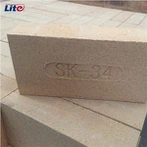
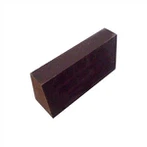
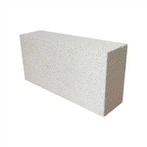
The air removal method and production process in the production process of high alumina bricks. High alumina bricks are refractory materials. The production process is similar to clinker clay bricks, but the proportion of clinker in the ingredients is as high as 90%. Fine grinding can improve product quality. So, what are the methods to remove the air in high alumina bricks?
The structure of high alumina brick is a heterogeneous body composed of solid matter and gaseous pores. Pores are an important factor affecting the performance of products at room temperature and high temperature, especially under high temperature conditions, greatly reducing the resistance of products to external corrosion. The original problem of the formation of pores is: the air in the material is not completely eliminated when the high alumina brick is formed; the space is left after the material is removed; the raw material is not fully calcined, some salts that should be decomposed are not completely decomposed, and the components that should be burned are not completely burned. Burning; uneven material composition, uneven shrinkage during high temperature firing, etc.
Lime kiln high alumina brick production process
The production process of high-alumina brick and multi-clinker clay brick is similar. The difference is that the proportion of clinker in the ingredients is higher, which can be as high as 90-95%. The clinker needs to be sorted and sieved to remove iron before crushing, and the firing temperature Higher, such as Ⅰ, Ⅱ high alumina bricks are generally 1500~1600℃ when they are fired in a tunnel kiln.
The high-aluminum clinker is strictly selected and classified before crushing, and is stored in a classified manner. The method of fine grinding of bauxite clinker and combined clay can improve the product quality.
The main refractory materials commonly used in lime kilns are: dense clay bricks, high-strength clay bricks, low-porosity high-alumina bricks, sillimanite bricks, and alkaline bricks such as magnesia-chrome bricks, magnesia-chrome spinel, magnesia bricks.
There are many types of lime kilns, mainly shaft kilns, rotary kilns and ring kilns. Shaft kilns are used in most countries to produce lime, and rotary kilns are used only when the demand for lime is large.
The working temperature around the inlet of the lime shaft kiln and the lining of the preheating zone is relatively low. It is mainly affected by the mechanical impact and abrasion of the materials. Dense clay bricks can be used for masonry.
The calcining belt lining of the lime-hardened kiln is damaged quickly due to the abrasion of materials, the erosion of air flow and the chemical erosion of CaO at high temperature. For small and medium shaft kilns, high alumina bricks and sillimanite bricks with low porosity are generally used; for large shaft kilns, alkaline bricks such as magnesia chrome bricks, magnesia bricks, and magnesia spinel bricks are used as the lining body for firing.
The use temperature of the lining around the cooling zone of the lime shaft kiln and the discharge port is also relatively low. The cause of damage is the temperature difference caused by the abrasion of lime and the alternating effect of cold and heat. High-strength clay bricks can be used for this part.
[How are high alumina bricks made]
Phosphate-bonded high alumina bricks are used in the preheating zone, high temperature zone and tuyere bricks of rotary kilns and vertical kilns used in the cement industry. The product has high strength, strong abrasion resistance, and good thermal shock resistance. It is suitable for all kinds of cement kilns and has good results.
Phosphate high alumina bricks are made of high-quality high alumina bauxite as raw materials, combined with aluminum dihydrogen phosphate, and dried in a drying oven. Phosphate high alumina bricks are mainly used in dry-process cement production kilns, rotary kilns, phosphorous chemical kilns, etc. Phosphate high alumina bricks have high refractoriness, good wear resistance and high strength.
Phosphate-bonded high alumina bricks have good thermal stability, no shrinkage but expansion. Before 1200℃, the thermal strength is better than ordinary high alumina bricks in the transition zone. It has higher wear resistance, so it is suitable for cement kilns. Transition zone and cooling zone lining materials.
Phosphate-bonded high-alumina refractory bricks have accurate specifications and dimensions, high load softening temperature, high compressive strength, good thermal shock stability, abrasion resistance, and peeling resistance. It has the characteristics of stable performance, short construction period and energy saving.
Refractories for cement kilns
Refractory materials for cement kilns are multi-variety materials and should be used in a comprehensive manner. There are mainly the following categories:
(1) Aluminum-silicon refractory materials;
(2) Heat insulation refractory materials;
(3) Pouring material.
(4) Alkaline refractories
The main varieties of alkaline refractories are: magnesia chrome bricks, magnesia bricks, spinel bricks, dolomite bricks, etc. Magnesia chrome bricks are divided into ordinary magnesia chrome bricks, direct combined magnesia chrome bricks, and semi-direct combined magnesia chrome bricks.
Alkaline refractories are mainly used in the firing zone, transition zone and kiln mouth of cement kilns. In particular, spinel brick has become one of the main kiln lining materials for large cement kilns. It is used in the transition zone, gradually used in the cooling zone, the kiln mouth, and even in the firing zone. It is gradually replacing magnesia chrome bricks.
Cement kiln burns raw materials to mature materials, and the comprehensive influence factors of kiln lining refractories are as follows:
(1) Temperature factor;
(2) Chemical attack;
(3) Mechanical wear.