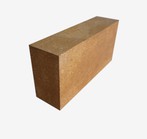
In the field of high-temperature industry, container selection is directly related to production efficiency and product quality. Many practitioners often confuse crucibles with saggers, not knowing that their functional positioning is completely different. A ceramic factory once misused crucibles to fire bone porcelain, resulting in the scrapping of the entire kiln of products and a loss of up to hundreds of thousands of yuan. This real case warns us: accurately distinguishing the characteristics of the two is a must for high-temperature operations.
1. Essential differences: functional positioning determines morphological characteristics
Differences in design philosophy
- Crucible: Like a "pressure cooker" in a laboratory, it is designed for direct contact with high-temperature melts. Its iconic thick-wall design (common wall thickness is 10-15mm) can withstand extreme temperatures above 1600℃, and the bottom is mostly arc-shaped to enhance thermal shock resistance.
- Sagger: It is more like a "safe" in a high temperature environment. It adopts a lightweight structure (wall thickness is usually 5-8mm), with multiple layers of shelves inside, and an air sandwich design to achieve uniform heat distribution, ensuring that the protected items are not contaminated by kiln smoke.
Material code analysis
- Crucible survival rules:
The graphite crucible (temperature resistance 1800℃) contains 95% high-purity graphite and is impregnated with an anti-oxidation coating on the surface;
The corundum crucible (temperature resistance 2000℃) adopts an α-Al₂O₃ microcrystalline structure, and the porosity is strictly controlled below 5%.
- The secret of the sagger formula:
Traditional clay saggers (temperature resistance 1300℃) add 30% pyrope to improve thermal stability;
Silicon carbide saggers (temperature resistance 1500℃) form SiC-Si3N4 composite structure through reaction sintering, and can be recycled more than 200 times.
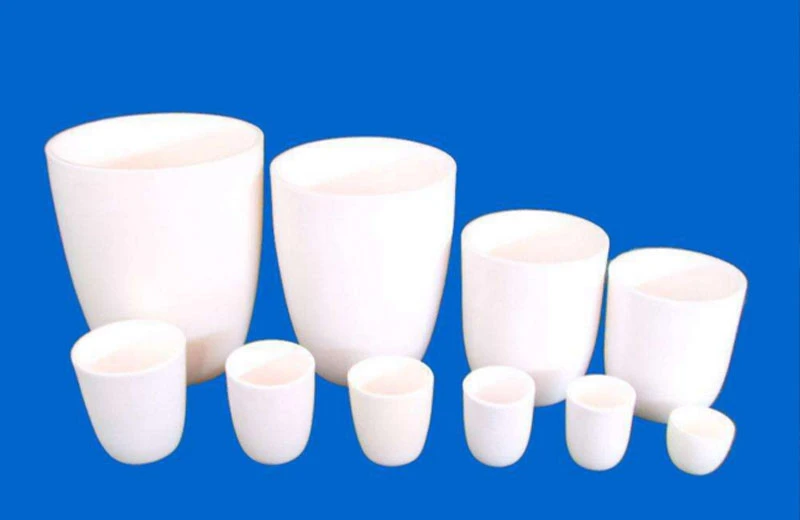
The difference between crucible and sagger
2. Selection Guide: 5 Key Decision Points
-
Temperature Red Line
<1400℃, saggers are preferred
>1600℃, special crucibles must be used
- Medium characteristics
Strong acid and strong alkali environment: choose quartz glass crucible (HF acid resistance requires platinum lining)
Oxidizing atmosphere: Magnesium aluminum spinel sagger has a lifespan three times longer than traditional clay sagger
- Economic Account Calculation
The unit price of graphite crucible is ¥2000, but it can be reused 50 times
The cost of using silicon carbide crucible once is 40% lower than that of clay crucible
- Thermal efficiency comparison
The direct heating efficiency of the crucible is 85%
The indirect heating of the sagger will lose 15-20% of the heat energy
- Margin of safety
The molten aluminum must be treated with a silicon nitride coated crucible to prevent aluminum penetration
The sintering of lithium battery materials requires the use of a zirconia crucible to prevent metal contamination
Remember: choosing the right high temperature vessel is like installing a "turbocharger" for your process.