Latest Products


Contact Us
- No.92 Jianshe West Road, Zhongyuan District, Zhengzhou, Henan,China.
- albert@literefractory.com
- +8619937887923


Find Similar Icon High Quality Magnesia Carbon Brick For Cement Kiln China Manufacturer's Refractory Welding Cutting Magnesite MgO SiO2
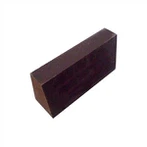
Refractory magnesium-carbon bricks are a type of advanced composite refractory material made from high-purity electro-fused magnesia and high-purity graphite as the main raw materials, with the addition of special metal anti-oxidants. They are formed under high pressure and undergo low-temperature heat treatment. They perfectly combine the excellent corrosion resistance of magnesia and the high thermal conductivity, low thermal expansion of graphite. They are indispensable lining materials for key parts in modern metallurgical industries, such as steel-making converters, electric furnaces, ladle refining furnaces (LF furnaces), and ladle working linings.
Description
Magnesia Carbon Brick descriptions from the supplier
Magnesium-carbon bricks are composite refractory materials mainly composed of magnesium oxide (60% - 90%) and carbon (10% - 40%). They possess characteristics such as high temperature resistance and resistance to slag erosion, and are widely used in high-temperature industrial fields such as steel and glass production.


Magnesia Carbon Brick parameteres
Magnesium-carbon bricks are mainly composed of magnesium powder (such as electrolytic magnesia, high-purity magnesia) and graphite powder, which are mixed in a certain proportion. Phenolic resin and other binders are added, and they are formed through high-pressure molding without the need for sintering. The key component ratios are as follows:
1. Magnesium oxide 60% - 90% - providing fire resistance and chemical erosion resistance
2. Carbon 10% - 40% - enhancing thermal conductivity and thermal shock resistance
3. Additives ≤ 5% - inhibiting carbon oxidation (such as aluminum, silicon metals)

features Magnesia Carbon Brick
The core features of magnesia-carbon bricks:
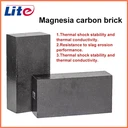
1. High temperature resistance: The melting point of magnesium oxide is approximately 2800℃, while the melting point of carbon exceeds 3000℃, enabling stable operation at temperatures above 2000℃.
2. Resistance to slag erosion: The low wetting property of graphite reduces the penetration of molten slag, and magnesia resists erosion by alkaline slag, suitable for the linings of steel ladles and converters.
3. Good thermal conductivity: The high thermal conductivity of carbon helps to distribute heat evenly, protecting the equipment structure.

applications of Magnesia Carbon Brick
Magnesia Carbon Brick Mainly used in the following scenarios:
Steel smelting: Used for the lining of converters and electric furnaces, able to resist high-temperature corrosion and have a long lifespan
Glass industry: Used for the lining of glass kilns, able to withstand chemical corrosion and stable heat conduction
Aluminum electrolytic cell: Used as the lining material, able to withstand high temperatures and resist electrolyte erosion

product process of Magnesia Carbon Brick

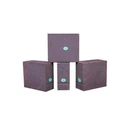
Magnesia Carbon Brick display

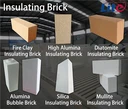
other type of Lite refractory bricks


Frequently Asked Questions
1.Are we a manufacturer or supplier? We are a manufacturer. Our company was established in 1994 and has been dedicated to refractory materials for 30 years. Our customers are spread across 120+ countries, and we serve over 3,000+ global customers. We have four major production bases, with an area of over 50,000 square meters. Our annual production capacity is 150,000 tons, and we have a complete product line to ensure production capacity and delivery time.
2.Do you offer product customization? Support customization, with over 150 patents, capable of developing new products within 7 days for each model, and 300+ sets of molds available for free sample production.
3.How do you conduct quality testing on your products? We strictly follow the quality management system, and we have a logistics chemistry laboratory. Here are some of the ways we conduct quality testing: 1) Raw material inspection 2) In-process inspection 3) Finished product inspection 4) Performance testing 5) Stability testing 6) The product qualification rate of the factory is ≥ 99.5%, and a test report is provided for each batch of products.
4.What is your delivery time? Usually, the goods will be dispatched within 7 to 15 days after the deposit is received. For urgent orders, please contact us to obtain a faster solution. We can dispatch the goods within 72 hours.
5.Can you provide samples? Yes, free samples are available. Customers only need to cover the shipping cost.
6. How is the after-sales service of your company? Global after-sales support, 24-hour response, with 3 international engineering teams, supporting the implementation of global projects, with the fastest response time of 24 hours. 9S one-stop service system, integrated engineering services, providing full-process engineering solutions including design, production, construction, training, and after-sales, helping customers reduce costs and increase efficiency.
7.Why choose us over other suppliers? We have a large scale, strong strength, and rich experience, professional technology, and perfect customer service, and have obtained various certifications such as CE/ISO9001/ISO45001/CNAS/SGS.
8.What are your payment methods? A-We accept various payment methods, including credit cards, PayPal, bank transfer, and Western Union. The specific payment method can be negotiated.
Hot Tags: find similar icon high quality magnesia carbon brick for cement kiln china manufacturer's refractory welding cutting magnesite mgo sio2, China find similar icon high quality magnesia carbon brick for cement kiln china manufacturer's refractory welding cutting magnesite mgo sio2 suppliers, manufacturers, factory
Magnesium-carbon bricks are mainly composed of magnesium powder (such as electrolytic magnesia, high-purity magnesia) and graphite powder, which are mixed in a certain proportion. Phenolic resin and other binders are added, and they are formed through high-pressure molding without the need for sintering. The key component ratios are as follows:
1. Magnesium oxide 60% - 90% - providing fire resistance and chemical erosion resistance
2. Carbon 10% - 40% - enhancing thermal conductivity and thermal shock resistance
3. Additives ≤ 5% - inhibiting carbon oxidation (such as aluminum, silicon metals)
You Might Also Like