With the development of industry, the country is now popularizing the application of environmental protection. Today I will introduce the hydrogen sulfide incinerator. It is a professional incinerator for treating hydrogen sulfide tail gas. Its working conditions are very bad. The inside of the furnace is full of acid gas, which is easy to cause serious corrosion to the lining material. In the design of the furnace lining, high alumina bricks are used. When waiting for refractory materials, the common factors of high temperature environment and acid corrosion medium should be fully considered. Therefore, the technical requirements for lining materials are as follows:
1. When the hydrogen sulfide incinerator is in normal operation, the normal working temperature in the furnace is on the right. In the actual production project, due to the fluctuation of materials and air volume and other special working conditions, the furnace temperature may reach about 1400 ℃, so the lining material is required Good high temperature resistance and softening temperature load.
2. Because the upstream hydrogen sulfide gas is unstable, every fluctuation in the combustion situation in the furnace is a big thermal shock to the furnace lining. It is required to have good thermal shock resistance when selecting the material of the fire facing surface, that is, the requirements for seismic performance are relatively high.
3. In order to control the temperature of the equipment shell, it should have stable thermal conductivity when selecting the lining material.
4. The furnace body has a large diameter, which requires the material to have good volume stability and creep resistance, and the reburning line change rate is small.
Selection of refractory materials
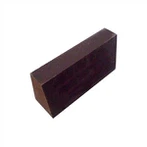
The working temperature of the incinerator is 1150°C, and the instantaneous maximum temperature can reach 1400°C. The main refractory structure of the furnace adopts a three-layer structure: ①The fire facing surface is lined with corundum-mullite bricks with good thermal shock performance; ②The middle layer of the lining is adopted High-alumina brick LZ-55 is used; ③The outer protective brick is made of high-aluminum heat-insulating refractory bricks. In order to ensure the temperature of the steel shell, an insulation layer is added to the outer wall of the equipment.
1. Corundum-mullite brick
Mullite refractory is the only stable binary mineral phase in the Al2O3-SiO2 binary system. Corundum-mullite brick is a high-alumina refractory product composed of mullite as the main crystal phase and a small amount of corundum phase, which has good high temperature strength, high temperature creep resistance, thermal shock resistance and corrosion resistance. Corundum-mullite bricks can use mullite particles as aggregates, α-Al2O3 powder as powders, fused or sintered corundum particles as aggregates, and synthetic mullite powders as powders. Aggregate and powder are mixed according to a certain proportion and particle size gradation, and the sulfite pulp waste liquid is used as a binder, and the materials are added in a certain order, fully mixed and uniform, and formed by a friction brick press or a hydraulic brick press. After the bricks are dried, they are fired at 1650~1750°C into finished products.
2. High alumina refractory bricks
High-alumina refractory brick (LZ-55) is a kind of aluminum silicate refractory made of high-quality high-alumina material and clay as a binder. It has high thermal stability and good slag resistance. High-alumina refractory bricks are generally formed and calcined from bauxite or other raw materials with high alumina content.
3. High-aluminum heat-insulating refractory products
High-aluminum heat-insulating refractory products have the characteristics of low bulk density, large porosity, low thermal conductivity and specific heat capacity, etc., and are mostly used in engineering for the thermal insulation layer (non-working layer) of industrial furnaces. High-aluminum heat-insulating refractory products bauxite or other raw materials with high alumina content are formed and calcined.
4. Glass fiber mat
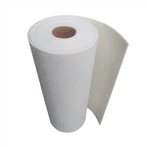
According to “4.1.2” in GB50264-2013 "Code for Design of Industrial Equipment and Pipeline Thermal Insulation Engineering", the thickness of the insulation layer of the part to prevent personal burns should be calculated according to the surface temperature method, and the temperature of the outer surface of the insulation layer should not be Above 60°C. The outer wall of the steel shell of the incinerator is made of glass fiber felt as the external thermal insulation material, which can not only improve the thermal insulation, increase the temperature of the metal wall, but also play the role of high temperature protection.
Selecting suitable lining materials, reasonably setting the thickness of each layer of masonry and external insulation, and controlling the shell temperature can effectively improve the corrosion resistance of the incinerator, effectively ensure the long-term safe and reliable operation of the incinerator, and extend its service life.