Product application: petroleum, chemical, metallurgy, electric power and other anticorrosion projects
product description
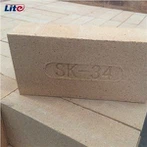
The main component of the raw material of acid-resistant bricks is silicon dioxide (SiO2). According to the acidic refractory material in the refractory material classification, refractory products containing a considerable amount of SiO2 are acidic refractory materials. It forms a large amount of mullite under high temperature roasting, which is a material with high acid resistance. Due to the compact structure and low water absorption of Zhongguan acid-resistant bricks, it can also withstand any concentration of alkaline media at room temperature. But it is not resistant to high temperature molten alkali. Acid-resistant bricks contain more than 70% silicon dioxide and are made by sintering.
Types of acid-resistant bricks
Acid-resistant bricks are made of clay or other non-metallic materials, processed by molding, sintering and other processes. They are suitable for acid-resistant linings and floor tiles or plate-shaped acid-resistant products. They are divided into glazed bricks and unglazed bricks.
The main component of acid-resistant bricks is silica, which forms a large amount of mullite under high temperature firing. It is a material with high acid resistance. Due to the compact structure of acid-resistant bricks and low water absorption, it can withstand anything at room temperature. Concentration of alkaline medium, but not resistant to high temperature molten alkali.
Characteristics of acid-resistant bricks
Acid-resistant brick is a corrosion-resistant material made by high-temperature oxidation and decomposition. It has the characteristics of high acid and alkali resistance and low water absorption. It is not easy to oxidize at room temperature and is not easy to be contaminated by media. In addition to hydrofluoric acid and hot phosphoric acid, it is resistant to temperature Acids such as chlorinated brine, hydrochloric acid, sulfuric acid, nitric acid, and alkalis of any concentration at room temperature have excellent anti-corrosion effects.
Acid-resistant brick application
It is widely used in anti-corrosion projects such as petroleum, chemical industry, metallurgy, electric power, papermaking, pharmaceuticals, etc., and can exert its corrosion resistance in underground sewage channels and open ground.
Technical requirements for acid-resistant bricks
A. The appearance quality of acid-resistant bricks should meet the requirements of the following figure.
B. Layering, tap the brick body with a metal hammer of appropriate quality, and the sound should be clear.
C. Backing pattern, the back side of the flat brick should have a backing pattern not less than 1mm deep. Note: The standard brick should have a large surface (230mm×113mm) that meets the requirements for the working surface in the table. If you need to specify the working surface when ordering, the surface should meet the requirements in the table.
D. Dimension deviation and deformation. The size deviation and deformation of the bricks should meet the requirements of the following figure.
E. Physical and chemical properties. The physical and chemical properties of bricks should meet the requirements of the following figure.