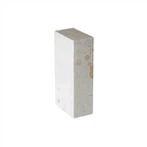
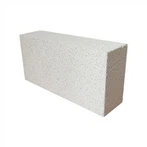
The primary differences between K23 and K26 firebricks are as follows:
Refractoriness:
- K23 Firebrick: This type of firebrick has a refractoriness of about 1260℃ (2300℉). It is suitable for medium-temperature applications.
- K26 Firebrick: K26 firebrick has a higher refractoriness, around 1427℃ (2600℉), making it appropriate for high-temperature environments.
Composition:
- K23 Firebrick: Typically contains a lower percentage of alumina (Al₂O₃), around 45% to 50%, which contributes to its lower refractoriness.
- K26 Firebrick: Has a higher alumina content, usually between 60% to 80%, providing better resistance to high temperatures and chemical attack.
Performance:
- K23 Firebrick:
Suitable for applications where the temperature does not exceed 1260℃.
Lower cost compared to K26.
Good for general-purpose use in furnaces, kilns, and incinerators where high-temperature resistance is not critical.
- K26 Firebrick:
Better for environments requiring higher temperatures, like steel manufacturing, glass making, and other high-heat industries.
Offers superior thermal shock resistance, erosion resistance, and mechanical strength.
More expensive due to its higher performance characteristics.

K26 refractory brick near me
Applications:
- K23 Firebrick: Used in applications like heat treatment furnaces, incinerators, and other medium-temperature industrial processes.
- K26 Firebrick: Ideal for applications in high-temperature furnaces, such as those in steel mills, foundries, and glass melting furnaces where extreme conditions are common.
Cost:
- K23 Firebrick: Generally less expensive, making it a cost-effective choice for applications where high-temperature resistance is not the primary concern.
- K26 Firebrick: More expensive due to its higher performance attributes, but often justified in high-temperature applications where durability and longevity are critical.
When choosing between K23 and K26 firebricks, consider the specific temperature requirements, the chemical environment, the need for thermal shock resistance, and the budget constraints of your project. If your application involves temperatures above 1260℃ or requires superior performance, K26 firebrick would be the better choice. For less demanding applications, K23 firebrick might suffice.