Everyone of refractory bricks understands its raw materials and debugging methods, but there are still many problems in its production process, such as excessive temperature difference of refractory bricks, etc. What are the reasons for this phenomenon? How can we prevent these phenomena from appearing? Below Henan The technical specialist of Lite Refractories will give you an introduction.
For companies producing refractory bricks, every step is actually very important. If there are steps that can be improved or improved, it will be of great help to improve product performance or reduce production costs. For example, when we are in production, it has a quenching belt to help us cool the product, but in this process, many companies are prone to excessive temperature differences, which will affect the effect of the product.
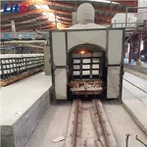
So at this time, we need more convenience to work hard so that we can provide products. Based on the successful experience of many companies, we can take many measures to avoid this problem. For example, the quenching area of refractory bricks can be cooled by pulsed airflow, which can avoid the impact of cold airflow on the function to a certain extent. Although the temperature difference is too large, it can reduce its hazards.
Secondly, for the quenching zone in refractory brick production, we can add some more decentralized designs, such as providing some relatively uniformly distributed hot air suction systems, which can naturally reduce the flow of hot air and greatly alleviate the problem of excessive temperature difference. After passing, a certain barrier can be set in the brick kiln, which can reduce the problem of excessive temperature difference caused by high-temperature radiation, and solve this problem can greatly improve its production efficiency.
The rapid cooling heat resistance of refractory brick refers to the rapid cooling when heated to a high temperature, and the temperature repeatedly rises and falls sharply. So how to test whether it can withstand rapid cooling and heating?
According to the different grades of refractory bricks, the test method can heat it to 900℃, then put it in cold water, repeatedly heat and cool it, until its surface cracks or falls off, and the brick with a weight loss of 20%, of course, it can withstand Rapid cooling and rapid heating cannot be used as an indicator of rapid cooling and rapid heating resistance, because the test conditions are different from the actual use conditions, and the test results can only be used to compare different levels of rapid cooling and heating resistance.
During use, it often encounters rapid changes in temperature. Its ability to withstand rapid changes in temperature is called rapid cooling and thermal stability. In addition to slag erosion, an important factor that causes damage to refractory bricks during use is temperature. Rapid changes.