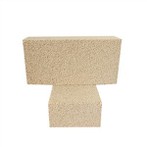
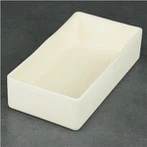
Why do acid-resistant bricks have strong acid resistance, and how about acid-resistant bricks?
Because there is silica in acid-resistant bricks, we all know that silica has acid resistance, and the mullite formed after high-temperature firing has higher acid resistance. Due to the low water absorption rate of acid-resistant tiles, it is not easy to be penetrated by the solution.
Therefore, it also has a certain alkali resistance, and can not be corroded by many kinds of alkaline substances at room temperature. Ceramic tiles can be used in acidic environments. The main component of acid-resistant tiles is silica, which forms a large amount of mullite under high temperature firing.
This is a substance with high acid resistance. In addition, due to the compact structure and low water absorption of acid-resistant ceramic tiles, it can withstand any concentration of alkaline medium at room temperature, but it is not resistant to high-temperature molten alkali.
The acid resistance of acid-resistant bricks is invisible from the surface of the ceramic tile. Only by passing the ceramic acid resistance test can we know its performance. As far as the current acid-resistant tiles are concerned, polished porcelain tiles are more acid-resistant than other glazed tiles, and the performance of antique-faced acid-resistant tiles is better.