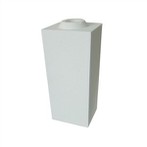
Alumina brick, also known as high alumina refractory brick, is a versatile material widely used in various industrial applications due to its excellent thermal stability, resistance to corrosion, and mechanical strength. Here, we explore the top five uses of alumina brick in detail.
1. Furnace Linings
One of the primary applications of alumina brick is in furnace linings across multiple industries, including steel, cement, glass, and ceramics. Furnaces operate at extremely high temperatures, often exceeding 1500°C (2732°F), requiring materials that can withstand such harsh conditions. Alumina brick's high melting point and thermal shock resistance make it ideal for lining furnaces, where it serves as a barrier against heat and chemical reactions with molten metals or gases.
In steelmaking, alumina brick linings are crucial in blast furnaces, electric arc furnaces (EAFs), and ladles, where they protect against the erosive effects of molten metal and slag. Similarly, in the glass industry, alumina brick linings are used in glass melting tanks and regenerators to maintain stable operating temperatures and prevent contamination.
2. Kiln Construction
Alumina brick plays a vital role in the construction of kilns used for firing ceramics, porcelain, and refractories. Kilns require materials that can endure prolonged exposure to high temperatures and corrosive atmospheres. Alumina brick's high refractoriness and chemical inertness make it an excellent choice for constructing kiln walls, arches, and floors, ensuring consistent and uniform heat distribution throughout the firing process.
3. Petrochemical Industry
In the petrochemical industry, where processes involve high temperatures and aggressive chemical environments, alumina brick finds extensive use in the construction of reactors, reformers, and furnaces. These applications demand materials that can resist thermal cycling and chemical corrosion caused by acids, alkalis, and hydrocarbons. Alumina brick's superior thermal stability and resistance to chemical attack make it indispensable for ensuring the reliability and longevity of equipment in petrochemical plants.

4. Power Generation
Alumina brick is widely employed in the construction of boilers and incinerators within power generation facilities. Boilers operate under high temperatures and pressures, requiring materials that can withstand thermal stress and abrasion from fuel combustion and flue gases. Alumina brick linings help maintain boiler efficiency by insulating against heat loss and protecting against corrosion from sulfuric acid and other corrosive elements present in flue gases.
5. Cement Industry
In the cement industry, alumina brick is used in the construction of rotary kilns, which are central to the production of clinker. Rotary kilns operate at temperatures ranging from 1200°C to 1450°C (2192°F to 2642°F) and require linings that can withstand these extreme conditions while providing thermal insulation and minimizing heat loss. Alumina brick's high refractoriness and thermal conductivity make it an ideal choice for lining rotary kilns, ensuring optimal process efficiency and prolonged service life.
Alumina brick's unique combination of high refractoriness, thermal stability, and chemical resistance makes it indispensable in a wide range of industrial applications. From furnace linings in steelmaking to kiln construction in ceramics and petrochemical reactors, alumina brick plays a critical role in enhancing operational efficiency, ensuring equipment durability, and maintaining process integrity.