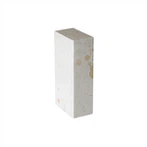
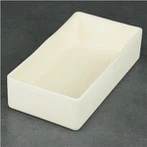
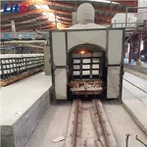
The production process of high alumina bricks and multi-clinker clay bricks is similar. Stone, fused corundum, etc. The difference is that the proportion of clinker in the ingredients of high-alumina bricks is relatively high, which can reach 90%-95%. The clinker needs to be classified and sorted and screened to remove iron before crushing, and the firing temperature is high, such as high-alumina such as I and II When the brick is fired in a tunnel kiln, the temperature is generally 1500-1600 °C.
Domestic production practice has proved that the high alumina clinker is strictly selected and graded before being crushed, and stored in a graded manner, and the co-fine grinding method of bauxite clinker and combined clay can improve the product quality. Generally speaking, we refer to aluminosilicate refractories with Al2O3 content greater than 48% as high-alumina refractories, and the shaped products are commonly used high-alumina bricks, which are generally divided into three grades:
Class I: Al2O3>75%; firing first-grade high-alumina refractory bricks, usually at a firing temperature of 1500 to 1600 °C;
Ⅱ and so on: Al2O3 60%-75%; firing secondary high alumina refractory bricks, usually firing temperature is 1450 to 1500 ℃;
III etc.: Al2O3 48%-60%. Firing third-grade high-alumina refractory bricks, usually at a firing temperature of 1350 to 1450 °C;
The production process of high-alumina bricks and multi-clinker clay bricks is similar. The clinker needs to be classified and screened to remove iron before crushing, and the firing temperature is relatively high. 1500-1600℃.